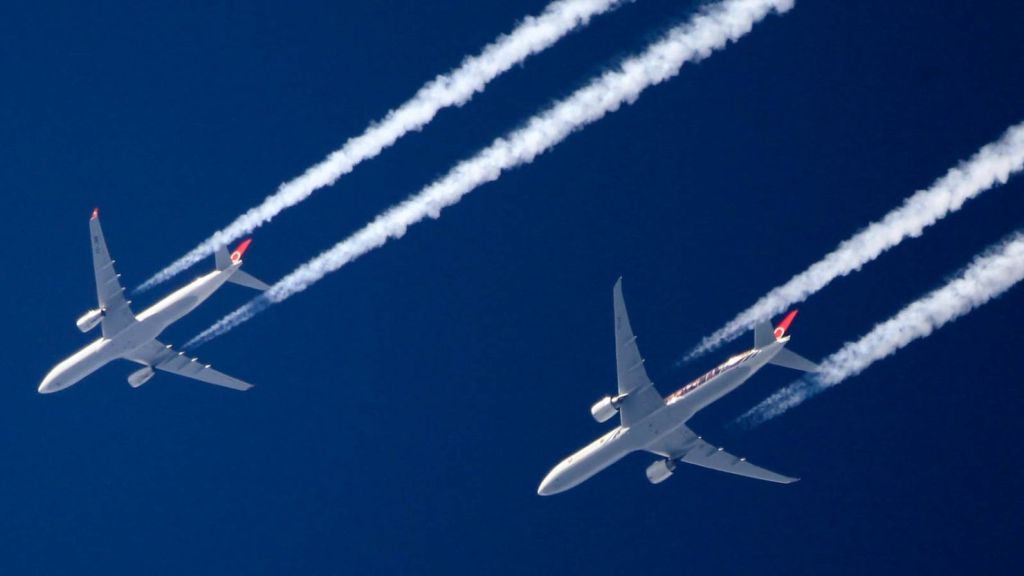
Have you ever looked up at the sky, seen a plane glide overhead, and noticed a long, white streak stretching out behind it? It almost looks like chalk being used to draw lines across the sky. What are those white trails, and why do some planes make them while others don’t?
Those lines have a name: contrails, short for “condensation trails.” They are not smoke and they are not mysterious chemicals. They are actually man‑made clouds made of tiny ice crystals.
How does a contrail form?
High‑flying airplanes cruise in the upper atmosphere, around 30,000 to 40,000 feet above the ground, where the air is extremely cold—often around −40 to −55 degrees Celsius. Jet engines burn fuel, and one of the main products of that burning is water vapor. This hot, humid exhaust rushes out of the engine and suddenly meets the very cold air outside.
When that happens, the water vapor quickly condenses into tiny droplets and then freezes into tiny ice crystals. To someone on the ground, all those ice crystals together look like a thin, white line trailing behind the airplane—just like your breath becoming visible on a cold morning when you step outside.
Why don’t all planes leave trails?
You might have noticed that on some days the sky is full of white streaks, while on other days planes seem to leave no visible trace at all. The difference comes down to the conditions of the air the plane is flying through.
For a contrail to form, the air must be both very cold and humid enough that the water vapor does not immediately evaporate. If the air is too dry, the tiny ice crystals disappear quickly, and you will not see a trail, even though the plane is still producing exhaust. That is why two planes at similar heights can behave differently if they are flying through slightly different pockets of air.
Why do some trails disappear and others spread out?
Contrails themselves can also behave differently. Sometimes they fade away within a few seconds or minutes. Other times, they linger, spread out, and start to look like thin, wispy clouds stretching over a large part of the sky.
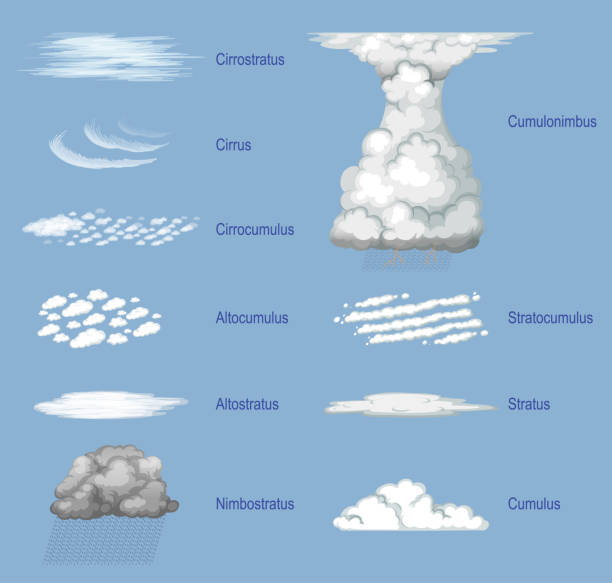
This again depends on humidity and wind. If the air is just barely humid enough, the ice crystals will form but then quickly sublimate (turn from ice back into invisible water vapor), so the line fades fast. If the air is very humid and stable, the ice crystals can hang around for a long time. Winds at high altitude can then stretch and smear the contrail, turning it into wide, cirrus‑like clouds.
Are contrails bad for the environment?
Contrails are not smoke, but they are still connected to how airplanes affect the atmosphere. The ice‑crystal clouds formed by persistent contrails can trap heat in Earth’s atmosphere, a bit like natural cirrus clouds do. This can have a small warming effect, especially at night when these clouds reduce how much heat escapes back into space.
Scientists are studying how big this effect is and how it compares to the carbon dioxide and other gases produced by airplanes. Some ideas to reduce contrails include changing flight altitudes or routes slightly on days when the atmosphere is especially favorable for long‑lasting trails
Summary
So the next time you see a plane drawing a bright white line across a blue sky, you will know you are really looking at a tiny, temporary cloud of ice crystals. Those white trails tell a story about what is happening high above your head: freezing temperatures, invisible water vapor, and just the right conditions for a man‑made cloud to appear.
Sources:
NASA – “Airspace: Contrails”
Kärcher et al. – “Understanding the role of contrails and contrail cirrus in climate”
U.S. EPA & FAA – “Contrails – Fact Sheet”
 WiseWhys
Leave a comment