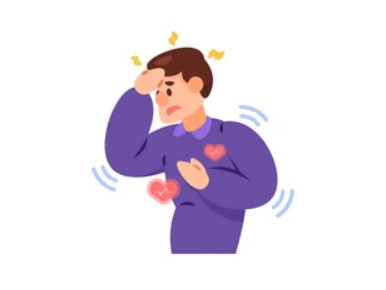
You’re watching a horror movie with your friends. The suspenseful music plays, and suddenly a scary scene appears on screen. Your heart starts pounding so hard you can almost hear it! Your pulse quickens, and your chest feels tight.
But WHY?
Your heart rate increases when you’re scared because of your “fight or flight” response. When you sense danger, your brain’s amygdala (the fear center) detects the threat and sends signals to your sympathetic nervous system. This system releases hormones like adrenaline and cortisol into your bloodstream. These hormones tell your heart to pump faster and harder, sending more oxygen-rich blood to your muscles so you can either stand and fight the threat or run away from it.

Preparing Your Body for Action
When your heart beats faster, it’s part of a bigger survival mechanism. Your body is preparing itself to respond to the threat. Along with increased heart rate, your breathing becomes faster, your muscles tense up, and your senses become sharper. Your pupils dilate so you can see better in the dark. This entire process happens automatically in milliseconds, even though the scary thing might just be in a movie!
Why Can’t You Always Control It?
Here’s something interesting: your heart rate response to fear happens whether the danger is real or imaginary. A horror movie isn’t a real threat, but your brain can’t always tell the difference between a movie scene and actual danger. Your amygdala reacts first, asking questions later! This is why you can’t simply decide to slow your heart rate down when you’re scared. It’s an automatic response designed to keep you alive.
Summary
Your heart beats faster when you’re scared because of your fight or flight response. Your brain releases adrenaline and cortisol, which tell your heart to pump faster and send more oxygen to your muscles. This automatic response prepares your body to handle a threat, even if that threat is just a scary movie. It’s a brilliant survival mechanism that has kept humans alive for thousands of years!
Sources:
- NCBI Bookshelf – Physiology, Stress Reaction
- Yale Medicine – How the ‘Fight-or-Flight’ Hormone Affects Women’s Hearts Differently
- NIH PubMed Central – How Do Amusement, Anger and Fear Influence Heart Rate
- Frontiers in Cardiovascular Medicine – Physiological Reactivity to Acute Mental Stress
What scares you the most? Is it movies, roller coasters, or something else? Have you noticed how your heart reacts differently to different types of scares? Let me know in the comments!
 WiseWhys
Leave a comment