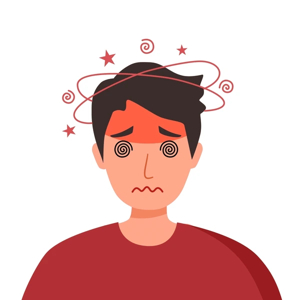
Picture this: You’re riding a carnival ride, spinning around faster and faster. The world becomes a blur of colors and motion. When you finally step off, your legs feel wobbly, the ground seems to tilt beneath you, and everything is moving even though you’ve stopped.
But WHY?
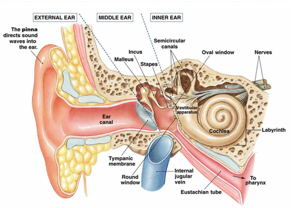
Dizziness from spinning is all about your inner ear and balance system. Deep inside your ear is a tiny structure called the vestibular system, which is basically your body’s internal gyroscope. It keeps track of which way is up and helps you maintain your balance.
How the Vestibular System Works
The vestibular system is made up of three semicircular canals filled with fluid. As you spin, this fluid sloshes around inside the canals. Tiny hairs inside these canals sense the movement of the fluid and send signals to your brain about which way you’re moving and how fast. Your brain uses this information to keep you balanced and to control your eye movements.
The Mismatch: Why You Feel Dizzy
Here’s where it gets interesting. When you’re spinning, the fluid in your inner ear canals builds up speed along with you. But the moment you stop, your body comes to a complete halt… except the fluid inside your ear keeps moving! It takes a few seconds for that fluid to slow down and stop. During those seconds, your vestibular system is telling your brain you’re still spinning, even though you’re not. Your eyes and your sense of balance are receiving conflicting messages, and that’s what causes dizziness!
The Eye Effect
Have you ever noticed that your eyes dart around rapidly when you’re spinning? That’s a reflex called nystagmus. Your vestibular system automatically tries to keep your eyes fixed on a point while you spin. When you stop, your eyes continue making those rapid movements for a brief moment, even though everything around you is stationary. This eye movement, combined with the confusion in your inner ear, makes the whole room seem to spin. Your brain is catching up!
Fun Fact: Astronauts and Space Sickness
Interestingly, astronauts in space experience something similar to dizziness! In zero gravity, their vestibular fluid floats around differently, and their inner ear sends strange signals to their brain. This is why many astronauts experience “space sickness” when they first reach orbit. Eventually, their brains adapt to the new environment. It’s a reminder that your vestibular system evolved for life on Earth—it’s surprisingly sensitive to unusual motion!
Summary
Dizziness from spinning is caused by a mismatch between the signals from your inner ear and what your body is actually doing. When you spin, fluid in your vestibular canals builds up momentum. Even after you stop, that fluid keeps moving for a few seconds, telling your brain you’re still spinning. Meanwhile, your eyes are making rapid movements to compensate. These conflicting signals create the sensation of dizziness and make the room appear to spin. It’s your brain’s way of struggling to reconcile the information it’s receiving—and it’s actually a testament to how sophisticated your balance system is!
What’s your experience with spinning? Have you ever gone on a ride that made you dizzy for minutes afterward? Or do you have techniques to avoid dizziness? Share your thoughts in the comments below—I’d love to hear your stories!
Sources:
Cleveland Clinic: Vestibular System
Scientific American: What causes dizziness
Newcastle University: The science behind that feeling when you stop spinning
 WiseWhys
Leave a comment