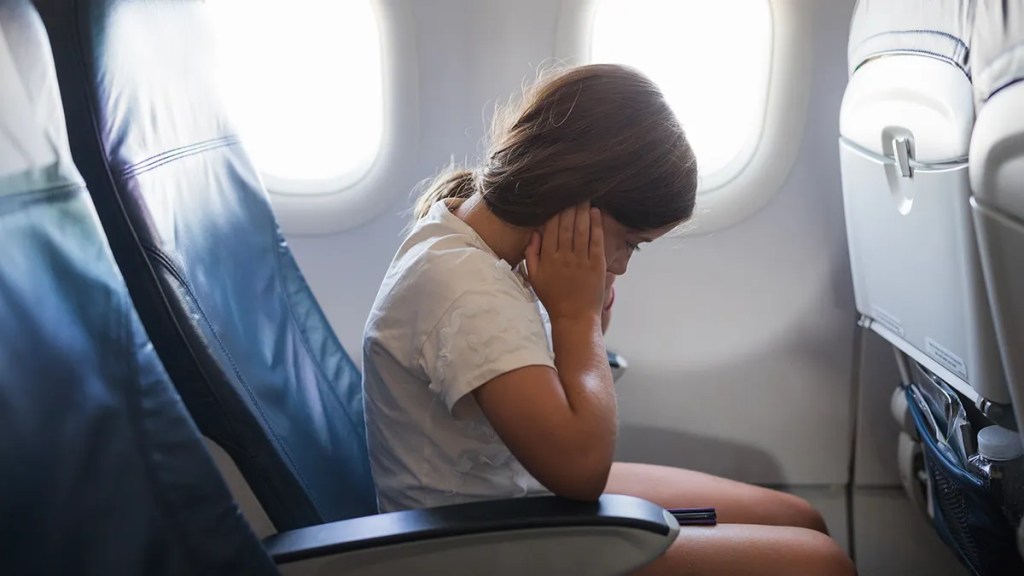
You’re sitting on a plane as it takes off, and suddenly you feel a strange sensation in your ears. Your hearing becomes muffled, and you might hear a popping sound or feel pressure building. Then, when the plane reaches cruising altitude, your ears pop and everything returns to normal.
But WHY?
Your ear popping is all about air pressure. Inside your ear is a tiny canal called the Eustachian tube that connects your middle ear to your throat. Normally, this tube keeps the pressure inside your ear equal to the pressure outside. But when an airplane changes altitude rapidly, the outside air pressure changes much faster than the air inside your ear can equalize. This pressure difference builds up and creates that uncomfortable feeling of fullness in your ears.
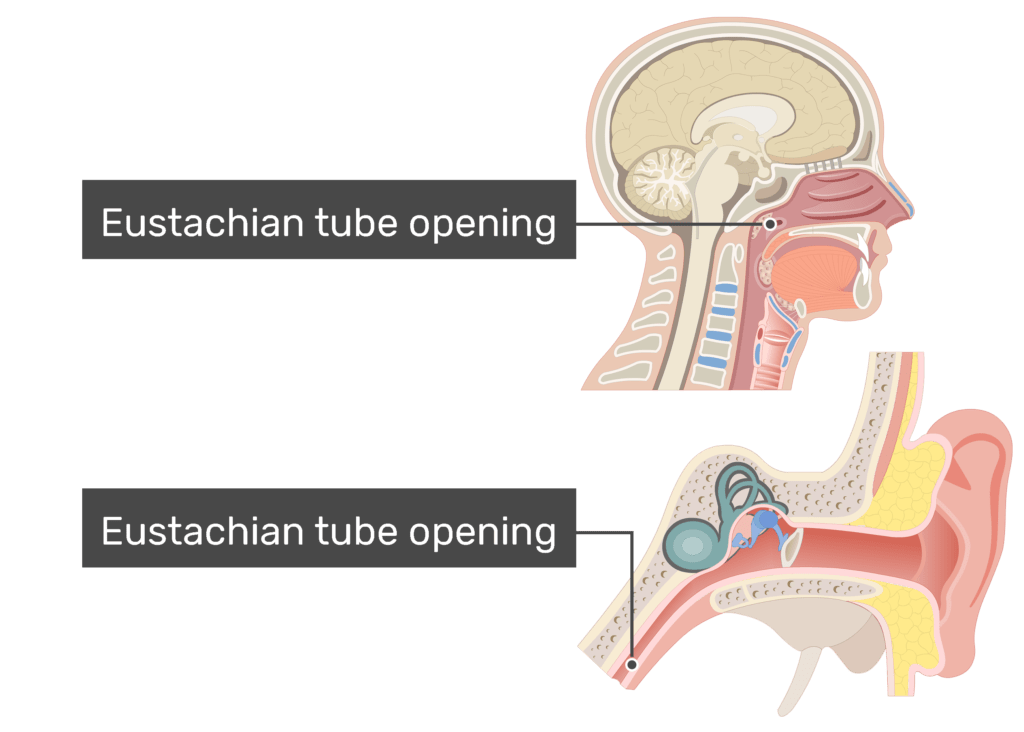
The Relief: When Your Ear Pops
Eventually, your Eustachian tube opens (sometimes with that satisfying popping sensation), and the air pressure inside your ear equalizes with the pressure outside the plane. The pop you hear is the sound of air rushing through the tube to balance the pressure.
Why It Happens More on Descent
Interestingly, most people experience more ear popping discomfort during descent (landing) than during takeoff. This is because the pressure change happens more gradually during takeoff but more rapidly during descent. Pilots often descend more steeply than they climb, and this faster slope can make it harder for your ears to equalize naturally.
How you can help speed pressure equalization
The Eustachian Tube pressurizes by pumping air through the tube, and to aid in equalizing the pressure in the Eustachian Tube, you can help by opening up the Eustachian Tube. Remember that the Eustachian Tube connects the middle ear to the throat. Since the tube connects to your throat, you just have to open your jaws and perform a chewing motion to pump air through the Eustachian Tube through your throat. This is why yawning, chewing gum, or swallowing can sometimes help your ears pop faster—these actions help open the Eustachian tube.
Summary
Your ears pop on airplanes because of rapid changes in air pressure at altitude. Your Eustachian tube, which normally keeps pressure equalized, can’t adjust fast enough when the plane climbs or descends. This creates a pressure imbalance that feels uncomfortable. When the pressure finally equalizes, you hear and feel that satisfying pop. Yawning, swallowing, or chewing gum can help speed up the process, because these actions open up the Eustachian Tube
Sources:
- Mayo Clinic – Airplane Ear
- NIH (PMC) – “Airplane Ear” – A neglected yet preventable problem
- Popular Science – Why do our ears pop on a plane? An audiologist explains
- NIH (PMC) – Eustachian Tube Function in Flight Attendants
Have you experienced ear popping on flights? What’s your go-to solution to make your ears pop faster? Share your airplane ear tips in the comments!
 WiseWhys
Leave a comment